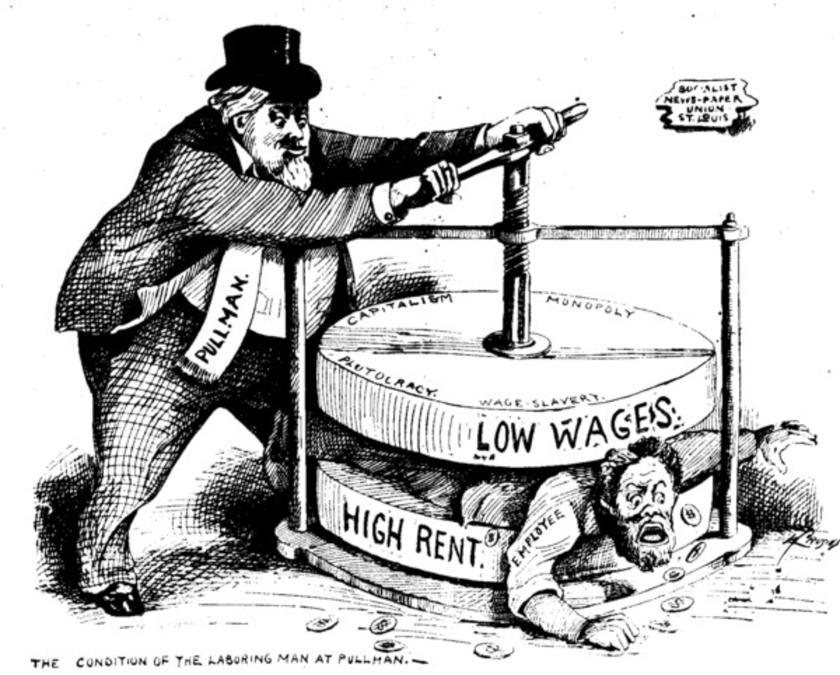
Party politics is a distraction. The real divide? Those who OWN the economy versus everyone else who WORKS in it.

BUT WE ARE NOT POWERLESS

The Proletariat, from the Latin Proletarius ‘producing offspring’) is the social class of wage-earners, those members of a society whose possession of significant economic value is their labour power (their capacity to work) | Wikipedia

This includes everyone who works for a living – whether you’ve got a steady job, a zero-hours contract, or unable to work because of health, care responsibilities, or lack of opportunity.

This isn’t a conspiracy. Billionaires are following the rules of the system. They own things we can’t live without – property, utilities, transport, energy, credit -then charge us to use them. We have no choice, so they profit. The real problem? They also own the news and most politicians, which lets them rig the game even further.

The rest of us – ALL OF US – are on the other side of this economic divide. Unless we can grasp that, the billionaire class will eventually drain us dry.

The scale of wealth

  • If we travelled back in time 1 million hours, we would go back to 1911.
  • If we travelled back in time 1 billion hours, we would go back to the Ice Age.
Inequality

How widening inequality damages trust, health and society as a whole

Big Tech

AI and the techno-feudal enclosure of data, computing power and control

Conflict

Bearing honest witness to war and its human cost, wherever it happens

Resistance

Understanding and challenging the political forces that shape our lives

Autonomy

Taking back control of our own devices, your data, your digital life

Editorial

About Proletaria and other thoughts on tech and community

The Billionaire Class in Numbers

The Billionaire Class in Numbers

As of 2025, there are nearly 3,000 billionaires worldwide (up 8.8% from 2,682 in 2024) with a combined wealth of USD 15.8 trillion — a record high driven not by asset bubbles, but by actual business creation and entrepreneurial success.

Billionaire wealth follows a pyramid structure: the vast majority cluster near the $1 billion threshold, while wealth becomes exponentially more concentrated as you move up. Nearly 1,700 billionaires (more than half globally) have wealth between $1-2 billion, representing the broad base of the pyramid.

At the middle tier, 860 multi-generational billionaires control USD 4.7 trillion — nearly a third of all billionaire wealth concentrated in established family dynasties that are slowly extending down the generations (second-generation up 4.6%, third-generation up 12.3%, fourth-generation and beyond up 10%).

At the very top, just 15 individuals hold over $100 billion each, with the wealthiest controlling more than entire sectors.

Two paths to billions: In 2025 alone, 196 self-made entrepreneurs added USD 386.5 billion in new wealth (the second-highest annual increase ever recorded), while 91 heirs inherited a record USD 297.8 billion — 36% more than in 2024, despite fewer people inheriting overall. By 2040, billionaires are estimated to transfer approximately USD 6.9 trillion globally, with at least USD 5.9 trillion passing to children.

Where the wealth concentrates:

  • Consumer & Retail remains the largest sector at USD 3.1 trillion (though growth slowed to 5.3% as European luxury brands lost ground to Chinese competitors)
  • Financial Services climbed 17% to USD 2.3 trillion, driven by strong markets and cryptocurrency rebound (80% from self-made billionaires)
  • Technology wealth increased 23.8% as innovators reshaped demand at scale
  • Industrial wealth recorded the fastest rise at 27.1%, reaching USD 1.7 trillion (over a quarter from new billionaires)

Gender dynamics: Women billionaires (374 vs 2,545 men) saw their average wealth rise 8.4% to USD 5.2 billion — outpacing men's 3.2% growth to USD 5.4 billion for the fourth consecutive year.

Source: UBS Billionaire Ambitions Report 2025